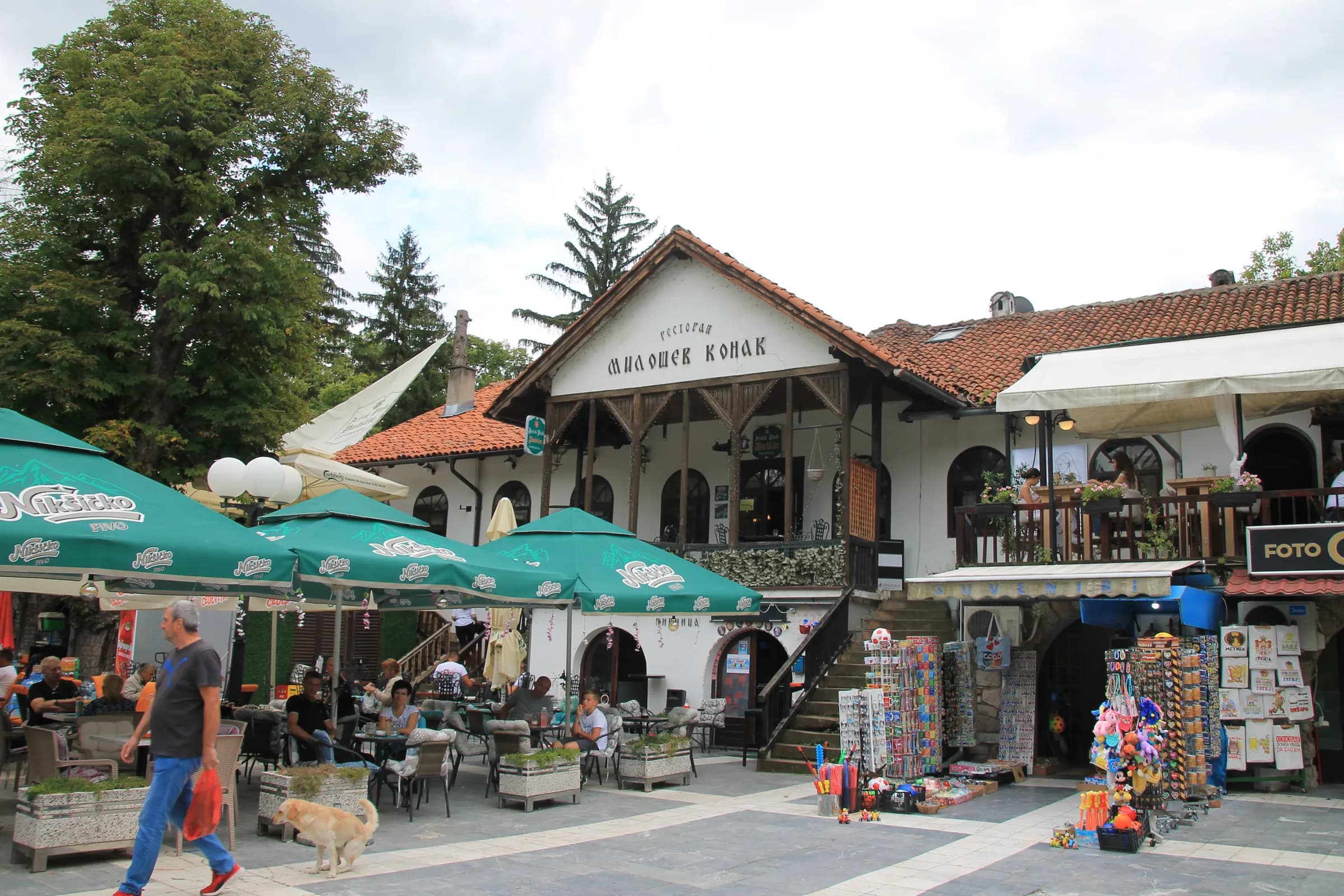
Photo: Ванилица · CC BY-SA 4.0

- Spring temperature
- 45.5°C
- From Belgrade
- 221 km
- By car
- 2h 30m
- Bus
- Direct from Belgrade
- Accommodation
- €35–€75/night
Introduction
Why Visit Sokobanja
Sokobanja has six radon-rich thermal springs rising at 28 to 45.5°C and an Ottoman-era hammam still in daily use, which makes it one of Serbia's oldest and most complete health resorts. The town sits in a valley between the Ozren and Rtanj mountains, 60 km north of Niš and 220 km south of Belgrade.
Sokobanja is a thermal spa town in eastern Serbia, set in a green valley between the Ozren and Rtanj mountains, about 60 km north of Niš and 220 km south of Belgrade. It is one of the country's oldest and most complete health resorts: six radon-rich thermal springs (28–45.5°C), an Ottoman-era hammam still in daily use, and famously clean mountain air have drawn visitors here for more than 170 years. For a Western traveller it offers a rare mix of genuine bathing tradition, easy forest hiking and prices a fraction of a spa in Austria or Italy. If you want one banja that does a bit of everything, Sokobanja is the easiest to recommend.
History
A Spa Since Roman Times
People have bathed here since Roman times, but Sokobanja's story is written across empires. The Ottoman traveller Evliya Çelebi described its lead-roofed Turkish bath in 1663, and the hammam in the central park — the Amam — still stands on those Roman-era foundations, now protected as a cultural monument. The modern resort began with royalty: in 1835 Prince Miloš Obrenović, who liked to take the waters himself, had them analysed in Vienna, where they compared favourably to Bad Gastein and Pfäfers, and the first patient was formally sent for treatment in 1837. Through the 19th and 20th centuries Sokobanja grew into a retreat for Serbia's cultural elite — the writers Ivo Andrić, Stevan Sremac and Branislav Nušić were all regular guests, and Sremac set some of his best-loved stories in the surrounding countryside. A local rhyme still sums up the town's promise: "Soko Banja, Soko grad — dođeš star, a odeš mlad" — "you arrive old and leave young." Today Sokobanja marks over 170 years of organised tourism, among the longest continuous traditions in Serbia (Tourist Organisation of Sokobanja, 2024).
Treatments
Thermal Springs & Health Treatments
Sokobanja has six thermo-mineral springs, with water emerging between roughly 28°C and 45.5°C, and among the highest radon concentrations of any Serbian spa. The two hottest rise inside the central Amam bath: Sveti Arhangel at about 43°C and Preobraženje (Transfiguration), which reaches up to 53°C at its outlet (sokobanja.rs, 2024). Beside the Amam sits a natural radon inhalatorium, a vapour room used for respiratory conditions, while the cooler Banjica springs (around 28–29°C) feed a second bathing complex beside the Moravica river.
The Amam itself is the experience most visitors remember. Built on Roman and Ottoman foundations and beautifully restored, it lets you soak in hot mineral water beneath old stone vaulting, much as travellers have for centuries — a genuine Turkish bath rather than a modern imitation. Around it the Special Hospital offers a full menu of procedures: mineral baths, inhalations, hydrotherapy, massage, saunas and a drinking cure at the taps in the park.
Treatment here rests on three natural factors working together — the mineral water, the radon-bearing gases and the clean, oxygen-rich mountain air. The waters and climate are long used for respiratory illness (asthma, chronic bronchitis, sinusitis), rheumatism and cardiovascular complaints, and the hospital runs structured programmes for stress and for metabolic conditions such as obesity and diabetes. Treat these as traditional and rehabilitative uses rather than medical cures: most visitors come for relief, prevention and rest, mixing a few baths or massages with plenty of walking. Casual bathing and wellness treatments are open to anyone and inexpensive; a full therapy programme may need a short medical assessment first, so arrange it in advance through your hotel or the hospital.
Nature & Setting
Mountains, Waterfalls & Clean Air
Sokobanja calls itself the green heart of Serbia, and the setting earns it. The town sits at about 400 m between two very different mountains: gentle, forested Ozren (1,117 m), threaded with marked walking trails, viewpoints and the Očno spring, and Rtanj, the near-perfect pyramid peak wrapped in legend — locals still climb it to see in the New Year. A short walk from the centre, the Ripaljka waterfall, one of Serbia's tallest, drops through the wooded Gradašnica gorge, and the rocky Lepterija riverside park, with the ruins of an old church, makes an easy afternoon ramble. Further out lie Bovan Lake, good for a summer swim, kayaking or a lakeside coffee, and several caves in the surrounding hills.
The air is a genuine draw in its own right: the mix of altitude, forest and low pollution is part of why Sokobanja has long been recommended for the lungs. It also makes an excellent base for day trips. Niš, Serbia's third city, is only about an hour away, with its Ottoman fortress, the grisly Skull Tower and some of the best food in the country; the Rtanj massif rewards a half-day hike; and the east-Serbian spa belt, including Gamzigradska Banja near the Roman UNESCO site of Felix Romuliana, is within reach for the curious. Between the springs, the trails and the excursions, it is easy to fill three or four unhurried days here without ever feeling rushed.
Events
Festivals & Events in Sokobanja
Sokobanja is at its liveliest in summer, when the town runs a season-long cultural programme — the Banjsko kulturno leto, or Spa Cultural Summer — from early July through the end of August. Concerts, folklore, open-air theatre, film screenings and food fairs spread across the Vrelo summer stage, the Marble Promenade and the amphitheatre by the museum, so on most summer evenings there is something happening within a short walk of the springs.
The season's centrepiece is the First Accordion of Serbia (Prva harmonika Srbije), held every August since 1962 — one of the country's oldest and most prestigious music festivals, and a genuine slice of Balkan culture (Kulturni centar Sokobanja). Over three days more than a hundred accordionists compete for the title while evening concerts fill the summer stage; tickets are inexpensive, and the atmosphere is exactly the warm, slightly rowdy authenticity many visitors come to Serbia hoping to find.
Around it cluster smaller, characterful events: a medicinal-herb fair in early July that suits the town's health-resort identity, the Golden Hands (Zlatne ruke) crafts fair in mid-July, and folklore gatherings under Ozren later in August. For the active, the Ozren mountaineering club runs guided hikes up Rtanj through the summer — and hardy locals climb the pyramid peak to greet the New Year. If you can time your visit to August, you will see Sokobanja at full, festive volume.
Where to Stay
Where to Stay in Sokobanja
For its size Sokobanja is remarkably well supplied, with around eighteen hotels plus dozens of guesthouses, apartments and private rooms — the town records well over a million overnight stays a year. Broadly, you are choosing between two experiences. The classic spa hotels — Sunce, Moravica, Zdravljak and Turist among them — sit near the centre and the baths, offer half board and organised therapy, and carry a comfortable, slightly retro character. Newer wellness-focused properties such as Soko Terme and Soko IN Spa add saunas, indoor thermal pools and packaged treatments for a more contemporary stay.
Expect roughly €35–75 a night for a comfortable double, very often with half board included — excellent value by Western standards, and one reason Serbs return year after year. Private apartments and guesthouses are cheaper still and suit families or longer visits, and many sit within a short walk of the Amam. The main trade-off is seasonality: summer, especially July and August, and the festival weekends fill fast, so book several weeks ahead if you travel then, while spring and autumn are quieter, cooler and noticeably cheaper. Whatever the season, compare hotels and check current availability on Booking.com before you travel, and prioritise a room within walking distance of the baths and the park if bathing is your main reason for coming.
Getting There
How to Get to Sokobanja from Belgrade
Sokobanja lies about 220 km from Belgrade — a drive of roughly two and a half to three hours, south on the A1/E75 motorway and then east into the hills near Aleksinac. Direct and connecting buses run daily from Belgrade's main bus station, taking around four hours; there is no train to the town itself, so the bus or a car are the realistic public options. The nearest city is Niš, just 60 km away, and its Constantine the Great Airport has seasonal flights from several European cities, making it the most convenient arrival point if you are flying in — from there it is a 50-minute drive or a short onward bus. You do not need a car once you are in Sokobanja: the springs, baths, market and parks are all within an easy walk, and the town is small enough to cross on foot. A car does help, though, for day trips to Rtanj, Bovan Lake and the villages of the Ozren foothills, and parking in town is straightforward and mostly free.
Visitor Tips
Tips for Western Visitors
A few honest expectations make Sokobanja far more enjoyable. English is spoken partially — reasonably well at larger hotel receptions and by younger staff, less so by older attendants at the baths and in the market — so a handful of Serbian phrases and a translation app go a long way. Serbia is increasingly card-friendly, but carry some dinars in cash for the market, kiosks and smaller cafés; ATMs are easy to find in the centre, and Wi-Fi is standard in hotels. Pack swimwear and flip-flops for the pools and hammam, and bring any medical paperwork if you plan a specific therapy. Above all, adjust your frame: this is a working health resort with a social, slightly old-fashioned atmosphere, not a hushed luxury spa. The hammam and pools are functional and often busy with regulars taking their cure, and the promenade fills with families on summer evenings — lean into that authenticity rather than expecting Western polish and you will get the real Sokobanja. The best months are May–June and September–October, when the weather is kind and the crowds thin; if you enjoy a lively scene, the summer brings open-air concerts and festivals, while winter is quiet, crisp and cheap.
FAQ
Frequently Asked Questions
Is English spoken in Sokobanja?
Partially. Larger hotels and younger staff generally manage English, but older attendants at the baths and smaller vendors may not. A translation app and a few Serbian phrases are worth having.
How hot are the thermal springs in Sokobanja?
The six springs range from about 28°C to 45.5°C, with the Preobraženje outlet inside the central Amam bath reaching up to 53°C. Water is tempered to a comfortable level for bathing.
How do I get to Sokobanja from Belgrade?
It is about 220 km, or 2.5–3 hours by car via the E75 motorway. Direct buses run from Belgrade (around four hours), and the nearest airport is in Niš, 60 km away.
Are there swimming pools, or just baths?
Both. The historic Amam hammam offers hot mineral baths, and several hotels have indoor thermal pools; there are also seasonal outdoor pools and Bovan Lake nearby for summer swimming.
Is Sokobanja good for families?
Yes. Shallow pools, easy walks, the lake and open-air summer events make it an easy-going family base, and apartments are inexpensive for longer stays.
When is the best time to visit Sokobanja?
Late spring (May–June) and early autumn (September–October) offer pleasant weather and fewer crowds. July and August are lively but busy, and rooms sell out well in advance.
Related