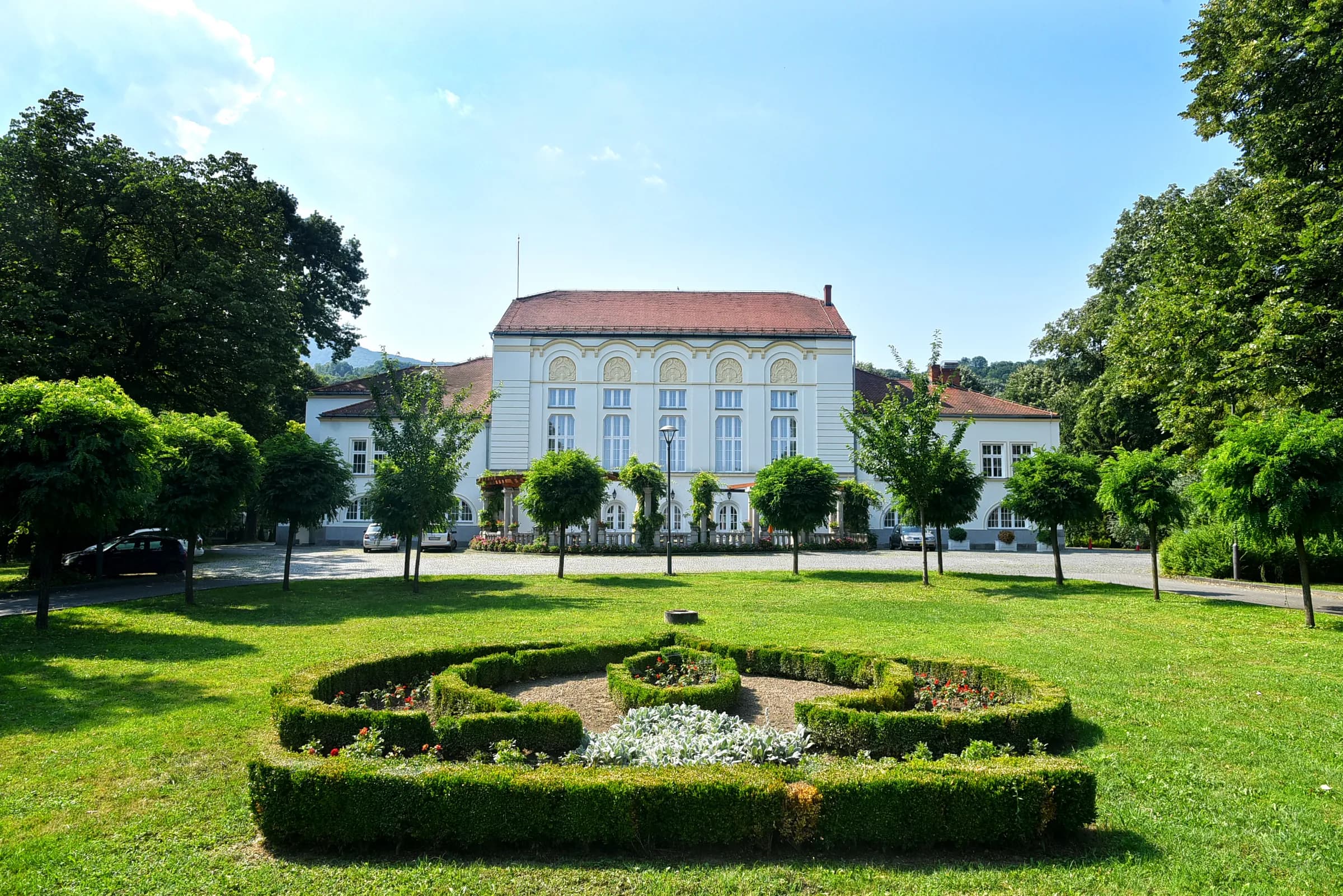
Photo: Mladen Sekulić · CC BY-SA 4.0

- Spring temperature
- 29°C
- From Belgrade
- 140 km
- By car
- 1h 30m
- Bus
- Direct from Belgrade
Introduction
Why Visit Banja Koviljača
Banja Koviljača is a thermal spa in western Serbia, on the Drina 6 km from Loznica and 140 km from Belgrade. Its sulphurous, iron-rich water rises at 29°C and is used with healing mud for rheumatic, orthopaedic and gynaecological conditions. Known as the Royal Spa, it holds one of the largest spa parks in the country.
Banja Koviljača is one of Serbia's oldest and grandest spas, set on the banks of the Drina river at the foot of Mount Gučevo in western Serbia, just 6 km from Loznica and only 5 km from the Bosnian border. Known as the 'Royal Spa' (Kraljevska Banja) for its long association with the Obrenović and Karađorđević dynasties, it is famous for its sulphurous, iron-rich thermal water and its healing mud, used to treat rheumatic, orthopaedic and gynaecological conditions — it has a particular reputation for helping with infertility. All of this sits within one of the largest and most beautiful spa parks in the country. For a visitor, it offers a rare combination of genuine royal grandeur, riverside nature and serious therapeutic tradition, a couple of hours west of Belgrade.
History
The Pearl of the Drina
Banja Koviljača's healing waters have drawn people since the Illyrian era, and the spa appears in written records as early as 1533; under Ottoman rule a women's hammam was built here in 1720. Its modern glory, though, is a royal story. The first chemical analysis of the water came in 1855, the first guest house in 1858, and in 1867 Prince Mihailo Obrenović placed the spa under state protection. Real development began in 1898, and it was King Petar I Karađorđević who gave Banja Koviljača its enduring form — the handsome sulphur bath he built in 1908 is still in use today. In 1932 King Aleksandar Karađorđević ordered the construction of the Kur-salon, a magnificent entertainment hall that remains the spa's architectural centrepiece. Through this golden age Banja Koviljača became known as the 'Pearl of Podrinje', a fashionable meeting place for the Serbian upper class.
Treatments
Sulphur Water, Iron & Healing Mud
Banja Koviljača's cure rests on three natural resources: sulphurous thermal mineral water, mildly radioactive iron-bearing water, and a rich curative mud (peloid). The therapeutic water, drawn from around 67 m below ground at about 29°C, is a sodium-calcium-hydrocarbonate hypotherma whose effects are attributed above all to its high sulphur content, and it is used for bathing, showering and drinking, while the mud is applied in packs and wraps. The Special Rehabilitation Hospital Banja Koviljača is a well-regarded institution that puts these to work on a broad range of conditions: rheumatism, degenerative diseases of the joints and spine, disc herniation, osteoporosis, peripheral nerve damage and post-traumatic and post-operative recovery, as well as certain gynaecological and skin problems and — notably — infertility, for which the spa has long been sought out. It also runs the first children's rehabilitation department in Serbia. A modern wellness centre housed within the historic 1908 sulphur bath blends these traditions with contemporary spa treatments, so the water serves cure and relaxation alike. As always, these are rehabilitative and traditional uses rather than guaranteed cures.
Nature & Setting
The Great Park, the Drina & Gučevo
The spa's setting is a large part of its appeal. Its park — some 40 hectares of horn beam, beech and oak laid out in the grand Western-European manner — is among the biggest and loveliest in Serbia, and a symbol of the spa in its own right; simply walking its avenues is considered part of the cure. Just beyond, the Drina river offers fishing, rowing and gentle riverside walks, while wooded Mount Gučevo rises behind the town, its summit crowned by a moving First World War memorial ossuary to the fierce battles fought here in 1914. The surrounding Jadar region is rich in Serbian heritage: the village of Tršić, birthplace of the language reformer Vuk Karadžić, is a short drive away and preserves a charming ethno-village, and the nearby Tronoša Monastery adds a spiritual note. With Bosnia just across the Drina, Banja Koviljača makes an unexpectedly rich base in a quiet corner of the country.
Events
The Royal Carnival
Banja Koviljača leans into its royal heritage with a genuinely distinctive annual event: the Royal Carnival (Kraljevski karneval), staged each year around the spa's magnificent Kur-salon. The centrepiece is a costumed masked ball in the very hall King Aleksandar built in 1932, complete with a parade of majorettes through the park and a broad programme of concerts, performances and cultural events that fills the town for several days. It is a rare chance to see the Kur-salon used as it was originally intended — for glamour and celebration rather than quiet convalescence — and it draws visitors from across the region. For a traveller, timing a stay to coincide turns a spa break into something more festive, and offers a vivid sense of the belle-époque grandeur that once made Banja Koviljača the Pearl of Podrinje. Exact dates move from year to year, so check the current programme before planning your trip around it.
Where to Stay
Where to Stay in Banja Koviljača
Accommodation in Banja Koviljača ranges from the Special Rehabilitation Hospital's own facilities, where guests stay on full-board treatment programmes, to a good spread of hotels, villas and private apartments in the town and around the great park. Because the spa has been a fashionable resort for well over a century, it has a stock of characterful older buildings alongside more modern options, and prices remain very reasonable by Western standards. Independent visitors can use the wellness centre and pools without being patients, making it easy to come simply for a relaxing few days by the Drina. The town is compact and walkable, with the park, the baths and the riverside all close together. Summer is the liveliest season, so book ahead if you travel then; compare hotels and check current availability on Booking.com before you go.
Getting There
How to Get to Banja Koviljača
Banja Koviljača is about 140 km from Belgrade, a drive of roughly an hour and a half via Šabac and Loznica, with the spa lying 6 km beyond Loznica on the road toward the Drina. Unusually for a Serbian spa, it is genuinely easy to reach without a car: both direct buses and a local train line run from Belgrade to Banja Koviljača, which has its own station, and buses from Loznica are frequent. Its position on the border makes it accessible from Bosnia too — Zvornik is just across the river, and Banja Luka and Sarajevo are within reach. The nearest airport is Belgrade's Nikola Tesla, about 135 km away. A car is useful mainly for exploring Gučevo, Tršić and the Drina valley, but not essential for a spa-focused stay.
Visitor Tips
Tips for Western Visitors
Banja Koviljača rewards visitors who take in its history as well as its water. Make time for the architecture — the 1908 sulphur bath and especially the Kur-salon are genuinely handsome, and the park that links them is one of the finest in Serbia — and use the wellness centre and mud treatments even if you are not on a medical programme. The riverside setting is a bonus: a walk or a coffee by the Drina, with Bosnia on the far bank, is a quietly memorable experience. English is spoken partially, so a translation app and a few Serbian phrases help, and it is wise to carry some cash for smaller purchases. The spa is pleasant year-round but at its liveliest in late spring and summer, when the park is in full leaf and the outdoor life of the town is in full swing; time it to the Royal Carnival if you want the town at its most festive.
FAQ
Frequently Asked Questions
Why is Banja Koviljača called the Royal Spa?
It was developed and favoured by Serbia's royal Obrenović and Karađorđević dynasties. King Petar I built its sulphur bath in 1908 and King Aleksandar the grand Kur-salon in 1932.
What does Banja Koviljača treat?
Its sulphur water, iron-bearing water and healing mud are used for rheumatic and orthopaedic conditions, spinal problems, post-operative recovery, and gynaecological issues — it has a strong reputation for helping with infertility.
How hot is the water?
The therapeutic water is drawn from about 67 m underground at around 29°C; the springs overall range roughly from 21°C to 38°C. Its key quality is its high sulphur content rather than heat.
How do I get there from Belgrade?
About 140 km (around 1.5 hours) via Šabac and Loznica. Unusually, both direct buses and a local train run from Belgrade, so a car is not essential.
Can I visit for relaxation rather than treatment?
Yes. The wellness centre, pools and mud treatments are open to ordinary visitors, and the great park and Drina riverside make it a fine relaxing break.
Related