Southern Serbia · Thermal Spa
Vranjska Banja: One of Europe's Hottest Thermal Springs
Pročitajte na srpskomPhoto: Ванилица · CC BY-SA 4.0

- Spring temperature
- 96°C
- From Belgrade
- 320 km
- By car
- 3h 20m
- Bus
- Direct from Belgrade
Introduction
Why Visit Vranjska Banja
Vranjska Banja's hyperthermal sulphuric springs reach up to 96°C at source, among the hottest in Europe, and are cooled before use. Its Special Hospital for Rehabilitation treats rheumatism, neurological disorders, post-traumatic recovery and skin conditions. The town lies 12 km from Vranje in the far south of Serbia, 320 km from Belgrade.
Vranjska Banja is a thermal spa town in the far south of Serbia, 12 km from the city of Vranje, famous for having some of the hottest thermal springs in Europe — hyperthermal sulphuric water that reaches up to 96°C at source (serbia.com; vranjskabanja.rs, 2025). The water is far too hot to bathe in directly and is cooled before use in balneotherapy at the town's Special Hospital for Rehabilitation, which treats rheumatism, neurological disorders, post-traumatic recovery and skin conditions. With Roman roots and a century of royal patronage, this is a place of genuine history and heat rather than a polished resort — a working cure town in an under-visited region, where the appeal is authenticity and the sheer drama of the springs. For a curious traveller, it is one of the most extraordinary hot springs in the Balkans, and one of the few in Europe where the water emerges hot enough to cook an egg.
History
Roman Baths & Royal Patronage
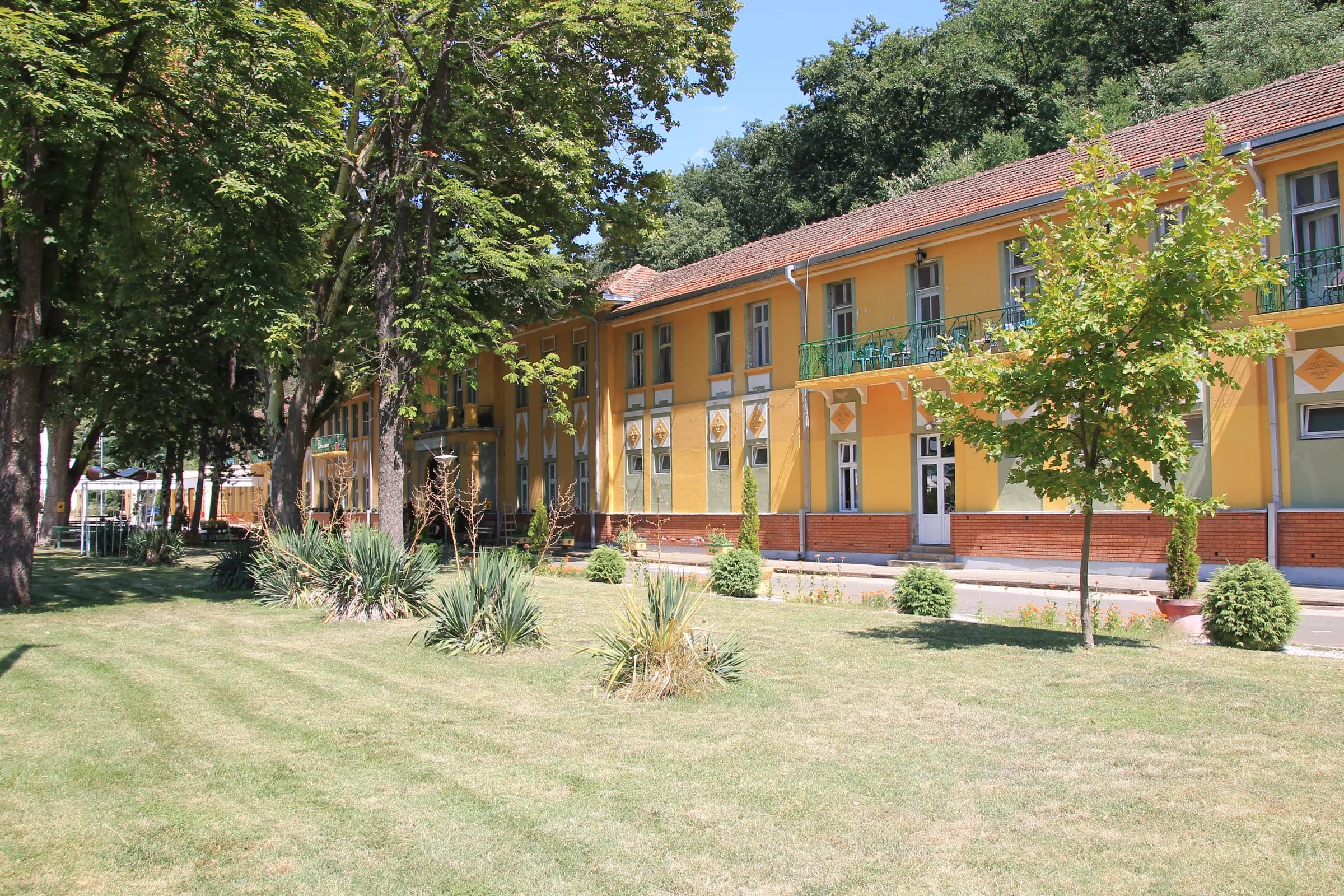
The healing tradition at Vranjska Banja reaches back to Roman times, when the region's scalding sulphur water was already channelled for bathing; fragments of that ancient use survive in the local record and lend the town a genuinely deep history. Its modern reputation, though, was made by royalty. Through the 19th and early 20th centuries Vranjska Banja served as a health resort for Serbia's kings and court, and the Special Hospital building still preserves its royal baths. That heritage gives the town over a century of continuous tourism tradition and a faded, dignified grandeur — old bathhouses, a leafy spa park and monumental buildings that speak of a more opulent era. Standing among them, you feel the layered past of a place that has drawn Romans, Ottomans and Serbian royalty to the same extraordinary springs. It is this sense of stepping into another century, as much as the water itself, that gives Vranjska Banja its particular character among Serbian spas.
Treatments
The 96°C Springs & What They Treat
Vranjska Banja's defining feature is heat. Its hyperthermal sulphuric springs emerge at between roughly 80°C and 96°C — among the hottest geothermal waters in Europe (Hot Springs Guides) — and are heavily charged with hydrogen sulphide, which gives the town its faint, characteristic mineral smell. Because the source water is scalding, it is cooled to safe temperatures before it ever reaches a bath; you do not, and cannot, soak in 96°C water. Treatment is delivered at the Special Hospital for Rehabilitation, where the cooled mineral water is used in baths, pools and physiotherapy. The recognised indications are rheumatic diseases, neurological disorders, post-traumatic and post-operative recovery, and skin conditions, and the sulphur content is central to its reputation for joints and skin. As with Serbia's other institute-based spas, these are structured rehabilitative programmes overseen by medical staff rather than casual wellness or guaranteed cures; entry is paid, and day visitors are best advised to contact the hospital in advance to confirm what bathing is available. The spring water and its sulphurous vapour, not luxury or leisure, are the reason to come.
Nature & Setting
Vranje, the Valley & the Deep South
Vranjska Banja sits in a green valley on the slopes above the Vranje basin, in a corner of Serbia that feels distinctly southern — warmer, slower and shaped by centuries of Ottoman presence. The nearby city of Vranje, 12 km away, rewards a half-day with its atmospheric old oriental quarter, the arched White Bridge with its tragic love legend, and a strong literary identity: it was the home of the writer Bora Stanković, whose play Koštana fixed the town's melancholy sevdah songs and old-town longing in the Serbian imagination. Above the city, the ruined fortress of Markovo Kale makes an easy hike with wide valley views, and the surrounding Pčinja region hides monasteries and quiet villages. This is one of the least touristed parts of the country, and travelling here means seeing a Serbia most visitors never reach — a place where the food is generous, the music is heartfelt and the pace is genuinely unhurried. For many, that authenticity is as memorable as the famous springs themselves.
Where to Stay
Where to Stay in Vranjska Banja
Accommodation in Vranjska Banja is centred on the Special Hospital for Rehabilitation and a scattering of private villas, guesthouses and apartments, rather than a strip of modern hotels. Most people who stay overnight are here for treatment and book full-board therapy packages through the hospital, which combine a room, meals and a prescribed course of balneotherapy; independent travellers will instead find simple, inexpensive private rooms and guesthouses in and around the town. Expect functional comfort and very low prices rather than boutique polish — this is a working health resort in a modest southern town, and its charm is authenticity, not luxury. If you would prefer a more conventional hotel base with restaurants and services on the doorstep, the city of Vranje, just 12 km away, has standard hotels and makes an easy place to stay and visit the banja from by day. Where rooms are listed online, you can compare options and check current availability on Booking.com; otherwise, contact the hospital directly, as some of its capacity is not sold through the usual travel sites.
Getting There
How to Get to Vranjska Banja
Vranjska Banja lies about 320 km south of Belgrade — a drive of roughly three and a half hours down the E75 motorway, which runs almost the whole way before you exit at Vranje and climb the final 12 km east to the spa. It is far closer to Niš: around 100 km, or a little over an hour, which makes Niš and its Constantine the Great Airport the natural gateway if you are flying in. Vranje itself is well connected by intercity bus from Belgrade and Niš, and from Vranje, frequent local buses and taxis cover the short hop up to the banja, so it is genuinely reachable without a car. That said, given how far south it lies, driving makes the trip considerably easier and lets you combine Vranjska Banja with the city of Vranje, the surrounding Pčinja region and the other thermal spas of Serbia's deep south in one loop.
Visitor Tips
Tips for Western Visitors
Come to Vranjska Banja for the extraordinary springs and the history, and set your expectations accordingly: this is a medical rehabilitation town in an under-visited part of Serbia, not a leisure resort, and the bathing facilities are clinical rather than luxurious. Entry to the hospital's balneotherapy is paid, and because it runs structured treatment programmes, it is worth contacting the Special Hospital for Rehabilitation ahead of time if you want to bathe as a day visitor; the spa park and the town itself, however, can be explored freely and cost nothing. English is spoken only partially, so a translation app and a few Serbian words will smooth the way, and you should carry cash, as smaller establishments may not take cards. Dress for a working spa — swimwear and flip-flops — rather than a spa hotel. The reward for the long journey south is authenticity: a warm, hospitable region, genuine thermal heritage and prices that feel like a different decade. Spring and early autumn bring the most comfortable weather, while summers this far south can be hot.
FAQ
Frequently Asked Questions
How hot are the springs at Vranjska Banja?
They are among the hottest in Europe, reaching up to 96°C at source, with a range of roughly 80–96°C. The water is hyperthermal and rich in hydrogen sulphide.
Can you actually bathe in 96°C water?
No. The source water is far too hot and is cooled to safe temperatures before it is used for bathing and therapy.
Is Vranjska Banja a resort or a hospital?
Primarily a medical rehabilitation centre. Bathing is done at the Special Hospital for Rehabilitation, so expect a therapeutic, clinical setting rather than a leisure spa.
How do I get to Vranjska Banja?
It is about 320 km (3.5 hours) from Belgrade via the E75, or roughly 100 km (just over an hour) from Niš. Vranje, 12 km away, has bus links.
Is it worth travelling so far south?
If you are drawn to genuine thermal heritage, extraordinary hot springs and an authentic, rarely visited region, yes. It is a niche, history-rich destination rather than a polished holiday spa.
Related