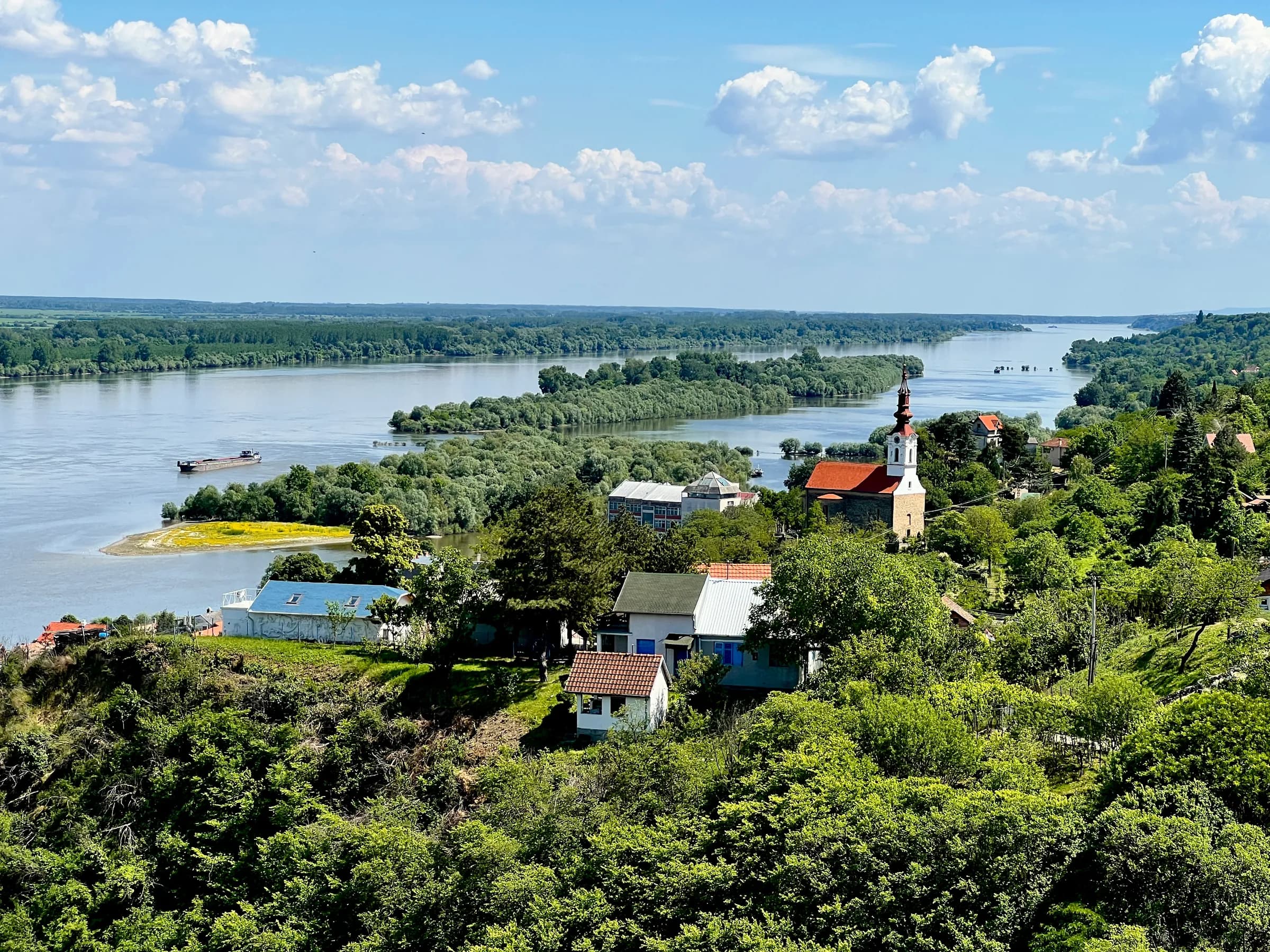
Photo: Lukder · CC BY-SA 4.0

- From Belgrade
- 54 km
- By car
- 47 min
- Bus
- Direct from Belgrade
Introduction
Why Visit Stari Slankamen
Stari Slankamen's water is saline mineral water rather than a hot spring, and is used for rheumatism, sciatica and arthritis rather than for thermal bathing. The salt water was known in Roman times. The spa stands on the Danube near its confluence with the Tisa in southern Vojvodina, 54 km from Belgrade and under an hour's drive.
Stari Slankamen is a spa in southern Vojvodina, on the Danube near its confluence with the Tisa and only 54 km from Belgrade — under an hour's drive, which makes it one of the few banje in this guide that works as a genuine half-day trip.
Its water is not a hot spring. It is saline mineral water, and it is used for rheumatism, sciatica and arthritis rather than for thermal bathing. That distinction matters when you are choosing where to go: if you have come to Serbia to sit in hot water, this is not the place, and Vrdnik on Fruška Gora is a short drive away and does exactly that.
What Stari Slankamen has instead is the longest and best-documented story of any spa in the region. The salt water was known in Roman times and used by the many peoples who passed through the region, and then allowed to run into the Danube for centuries before anyone thought to catch it.
History
From a Turkish Bath to the Izvorište Hotel
Use of the salt springs here is recorded from the Roman period, and the Celts, Huns, Avars and Turks also made use of them. The Turks built a bath 50 m from the spring — close enough that the arrangement needed no engineering at all.
For centuries after that, nothing did. The water simply ran down into the Danube. It was only in 1834 that the Austrian authorities enclosed the spring and piped it into catchments, which is the moment Stari Slankamen becomes a spa in the modern sense rather than a place where salt water happens to reach the surface.
The next step came in 1908, when a landowner from Stara Pazova built the Izvorište hotel, restored the spring, raised a water tower and laid 700 m of pipe to distribute the water. That catchment still works: it supplies the special hospital "Dr Borivoje Gnjatić" and its pool, which is where the spa's medical function sits today.
Treatments
Saline Mineral Water, and What It Is Used For
The water at Stari Slankamen is mineral and saline — salt water, not a thermal spring. It is applied to rheumatism, sciatica and arthritis, and the bathing here is therapeutic rather than recreational.
The special hospital "Dr Borivoje Gnjatić" is the institution that uses it, drawing on the catchment first enclosed in 1834 and extended in 1908, and it has a pool fed from that supply. This is a medical facility, and its pool serves patients rather than passing visitors.
Whether a day visitor can simply arrive and bathe is something we cannot confirm, and it is the single most important thing to check before setting out. Do not assume that being 54 km from Belgrade makes this an open swimming complex; write or telephone ahead and ask what access the hospital offers to people who are not admitted patients.
Nature & Setting
The Confluence and the Danube Bank
The setting is the other reason to come. Stari Slankamen stands where the Tisa joins the Danube, on high ground above the water, and the view over the meeting of two large rivers is the sort of thing that justifies the drive on its own.
The village itself is old and small, north of Belgrade on the Srem bank, and it has none of the resort infrastructure of the spas further west. Come for a walk along the bank, the view from the height, and lunch; that is the shape of a good visit here.
Where to Stay
Where to Stay at Stari Slankamen
The beds at Stari Slankamen belong to the special hospital and serve its patients. There is limited private accommodation in the village, but we hold no verified count, standard or price for it.
At 54 km from Belgrade, the honest advice is not to stay at all. Drive out, spend the day, and go back — that is what the distance is for. If you want an overnight in the area, Novi Sad is a short drive further on and has a proper choice of hotels, and Vrdnik on Fruška Gora has thermal water and rooms in the same direction.
Getting There
Getting to Stari Slankamen
By car it is 54 km from Belgrade, roughly 45 to 50 minutes north-west along the Danube through Srem. It is one of the shorter journeys to any banja in this guide, and easily done as a morning out.
Buses run from Belgrade towards Inđija and the villages of eastern Srem, and Stari Slankamen is reachable that way, though services to a village of this size are infrequent and a check of current timetables is essential rather than advisable.
The obvious pairing is Vrdnik: both are in Srem, both are within an easy drive of Belgrade, and between them they cover the two kinds of water — saline here, thermal there.
FAQ
Frequently Asked Questions
Is the water at Stari Slankamen hot?
No. It is saline mineral water, not a thermal spring, and it is used for rheumatism, sciatica and arthritis. If you want hot bathing near Belgrade, Vrdnik is the closer match.
How far is Stari Slankamen from Belgrade?
54 km, or roughly 45 to 50 minutes by car — close enough for a half-day trip.
Can I use the pool as a visitor?
The pool belongs to the special hospital "Dr Borivoje Gnjatić" and serves its patients. We cannot confirm that day visitors have access, so contact the hospital before travelling.
What is there to see besides the spa?
The confluence of the Tisa and the Danube, seen from the high bank the village stands on, and the old village itself.
How old is the spa at Stari Slankamen?
The springs were used in the Roman period and by successive peoples afterwards, including the Turks, who built a bath 50 m from the spring. The water was first properly enclosed by the Austrian authorities in 1834, and the Izvorište hotel and its 700 m of pipe followed in 1908.
Related